AML Audit and Assurance Training

4.9 (18 REVIEWS)
137 STUDENTS

GET THIS COURSE AND 2500+ OTHERS FOR ONLY £49 FIND OUT MORE

Strong Anti-Money Laundering (AML) controls rely on more than policies and procedures. Organisations must regularly assess the effectiveness of their AML programmes through structured audits and assurance activities that identify weaknesses, strengthen internal controls, and support ongoing regulatory compliance.

The AML Audit and Assurance Training course is a comprehensive online AML Training programme designed to develop a practical understanding of AML audits, compliance assurance, risk assessment, and internal control evaluation. From UK legislation and international regulatory frameworks to audit planning, evidence gathering, transaction monitoring, and emerging technologies, this course provides a structured overview of modern AML assurance practices.

Delivered through flexible online learning, this course explores AML Compliance, financial crime prevention, risk-based auditing, customer due diligence, suspicious activity reporting, regulatory expectations, and the growing role of artificial intelligence and blockchain in AML compliance. Whether you work in compliance, internal audit, financial services, or financial crime prevention, this course provides valuable knowledge that supports effective AML governance and regulatory assurance.

Sneak Peek

Learning Outcomes

By the end of this course, you’ll have developed a practical understanding of AML audit processes, compliance assurance, and risk-based monitoring within regulated organisations. You’ll gain knowledge of UK AML legislation, internal controls, audit planning, evidence gathering, reporting obligations, and emerging technologies used to strengthen financial crime compliance.

You will be able to:

  • Understand the principles of Anti-Money Laundering and financial crime prevention.
  • Explain the UK legal and regulatory framework governing AML compliance.
  • Understand the purpose and stages of an AML audit.
  • Apply risk assessment principles within AML audit activities.
  • Evaluate internal controls designed to reduce money laundering risks.
  • Understand customer due diligence (CDD), enhanced due diligence (EDD), and Know Your Customer (KYC) requirements.
  • Recognise suspicious transactions and common money laundering indicators.
  • Understand AML reporting obligations and compliance assurance activities.
  • Explore the use of artificial intelligence, blockchain, and data analytics in AML compliance.
  • Support continuous improvement of AML programmes through effective audit and assurance practices.

Certification

  • Instant digital certificate available upon completion
  • Printed certificate available for delivery (postal charges may apply)
  • Certification is recommended to be renewed every 3 years to stay updated
Training-Express-Certificate-CPD-QS-1-1

Accreditation

This course is fully accredited by CPD and endorsed by QLS, ensuring recognised standards of quality and learning.

Who Should Take This Course

This course is suitable for professionals involved in compliance, audit, governance, risk management, and financial crime prevention.

It is ideal for:

  • AML Analysts
  • Compliance Officers
  • Internal Auditors
  • Financial Crime Analysts
  • Risk and Compliance Professionals
  • Compliance Managers
  • Banking Professionals
  • Payment Services Staff
  • FinTech Compliance Teams
  • Anyone interested in AML audit and assurance

Whether you’re beginning a career in financial crime compliance or expanding your audit expertise, this course provides valuable knowledge of AML governance and assurance.

Why Take This Course

Financial institutions and regulated organisations are expected to maintain effective AML programmes that can withstand regulatory scrutiny. Regular audits and assurance reviews help identify control weaknesses, improve risk management, and demonstrate ongoing compliance with legal obligations.

Throughout this course, you’ll explore AML Audit, risk assessment methodologies, audit planning, evidence collection, internal controls, customer due diligence, transaction monitoring, compliance reporting, and the application of emerging technologies within AML programmes. You’ll also gain an understanding of regulatory expectations and best practices that support continuous improvement across financial crime compliance frameworks.

Designed for flexible online learning, the course includes lifetime access, tutor support, and an Instant Free CPD Certificate upon successful completion, allowing you to strengthen your AML audit knowledge while studying at your own pace.

Job Opportunities & Salary Expectations in the UK

AML audit and assurance knowledge is highly valued across banks, financial institutions, insurance providers, fintech companies, payment services, investment firms, and regulatory organisations.

Job Role

Average UK Salary

AML Analyst

£30,000–£42,000 per year

Financial Crime Analyst

£35,000–£50,000 per year

Compliance Officer

£38,000–£55,000 per year

AML Auditor

£42,000–£60,000 per year

Compliance Manager

£55,000–£80,000 per year

Head of Financial Crime Compliance

£85,000–£130,000 per year

Developing expertise in AML audit and assurance can also support progression into internal audit, risk management, regulatory compliance, governance, and senior financial crime leadership roles.

Entry Requirements

This course is suitable for learners from a range of professional backgrounds.

  • No previous AML audit experience is required.
  • A basic understanding of English is recommended.
  • Access to a computer, tablet, or smartphone with an internet connection.
  • An interest in compliance, financial crime prevention, audit, or risk management.

Course Curriculum

The detailed curriculum outline of our AML Audit and Assurance Training for Educational Institutions is as follows:

Build a strong foundation in AML Compliance by exploring the purpose of anti-money laundering measures and their role in protecting the financial system. This module examines the definition and stages of money laundering, common laundering techniques, sectors vulnerable to financial crime, the evolution of AML regulations, key stakeholders involved in AML enforcement, suspicious activity reporting, and the ethical responsibilities of AML professionals in maintaining transparency, integrity, and regulatory compliance.

Develop an understanding of the legal framework that governs anti-money laundering activities within the UK and internationally. This module explores the Proceeds of Crime Act 2002 (POCA), the Money Laundering Regulations 2017, the Sanctions and Anti-Money Laundering Act 2018 (SAMLA), the role of the Financial Conduct Authority (FCA), reporting obligations, record-keeping requirements, FATF Recommendations, international directives, regulatory enforcement, and the consequences of non-compliance.

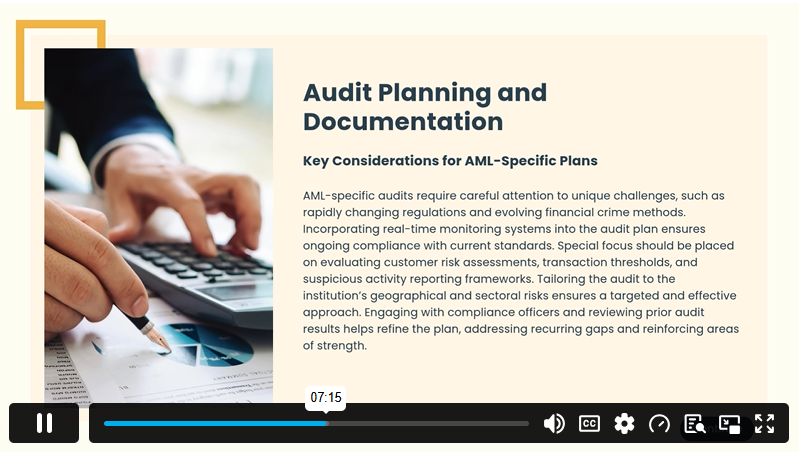
Learn how structured AML Audits help organisations evaluate the effectiveness of their financial crime controls. This module covers audit objectives, scope definition, regulatory compliance checklists, audit planning, documentation standards, identifying control weaknesses, root cause analysis, benchmarking against industry practices, continuous improvement strategies, and preparing clear audit reports that support effective decision-making by senior management.

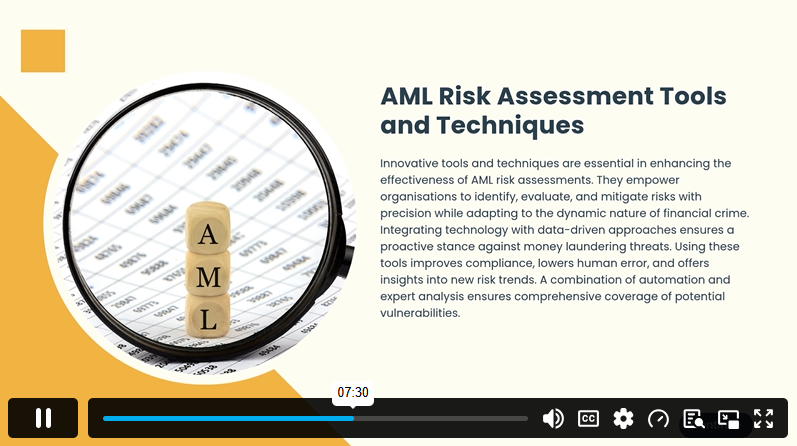
Explore the principles of risk-based auditing within anti-money laundering programmes. You’ll examine methods for identifying AML risks, applying risk scoring models, prioritising high-risk areas, defining the responsibilities of auditors and management, using specialist AML risk assessment software, scenario testing, data analytics, and assessing sector-specific risks within banking, financial services, and property transactions.

Develop an understanding of the internal control frameworks that support effective AML programmes. This module examines control objectives, evaluating control effectiveness, improving weak controls, collecting reliable audit evidence, audit sampling techniques, identifying financial crime red flags, transaction monitoring systems, Customer Due Diligence (CDD), Know Your Customer (KYC), Enhanced Due Diligence (EDD), and managing risks associated with Politically Exposed Persons (PEPs).

Examine how organisations demonstrate the effectiveness of their AML controls through reporting and assurance activities. This module explores UK reporting obligations, suspicious activity identification, whistleblower protections, customer behaviour analysis, geographic risk indicators, transaction monitoring tools, periodic compliance reviews, independent testing of AML controls, and aligning assurance activities with regulatory expectations to support continuous compliance.

Complete the course by exploring the technologies transforming modern Financial Crime Compliance. This module examines the application of artificial intelligence and machine learning in suspicious transaction detection, blockchain technology for financial transparency, advanced data analytics, fraud detection techniques, cybersecurity integration, cryptocurrency compliance, ethical AI governance, and emerging regulatory expectations surrounding digital financial technologies and virtual assets.

FAQs

1. What is an AML audit?

An AML audit is an independent review of an organisation’s anti-money laundering framework to assess whether policies, controls, and procedures are operating effectively and meeting regulatory requirements.

2. Who should complete this course?

The course is suitable for compliance professionals, AML analysts, auditors, risk managers, financial services employees, and anyone involved in financial crime compliance.

3. Does the course explain UK AML legislation?

Yes. You’ll gain an understanding of key UK legislation, regulatory expectations, and international AML frameworks that influence compliance programmes.

4. What is covered in AML risk assessment?

The course explores identifying money laundering risks, applying risk scoring techniques, prioritising high-risk areas, and supporting risk-based compliance decisions.

5. Will I learn about customer due diligence (CDD) and KYC?

Yes. The course explains Customer Due Diligence (CDD), Enhanced Due Diligence (EDD), Know Your Customer (KYC), and the management of Politically Exposed Persons (PEPs).

6. Why is evidence gathering important during an AML audit?

Reliable audit evidence helps demonstrate regulatory compliance, supports audit findings, and enables organisations to strengthen AML controls and governance.

7. Does the course explain suspicious transaction monitoring?

Yes. You’ll examine transaction monitoring systems, customer behaviour analysis, geographic risk indicators, and methods for identifying suspicious financial activity.

8. How is technology changing AML compliance?

The course explores how artificial intelligence, blockchain, data analytics, and machine learning are supporting transaction monitoring, fraud detection, and financial crime prevention.

9. Is the course suitable for beginners?

Yes. It introduces AML principles before progressing to audit planning, assurance, internal controls, and advanced compliance technologies in a structured learning pathway.

10. How can this course support my career?

It strengthens your knowledge of AML audits, regulatory compliance, risk management, and financial crime prevention, supporting career progression in compliance, audit, governance, and financial services.

Course Curriculum

AML Audit and Assurance Training
Module 1 Introduction to Anti-Money Laundering (AML) 00:14:00
Module 2 Legal and Regulatory Compliance in AML 00:14:00
Module 3 Conducting AML Audits 00:14:00
Module 4 Risk Assessment in AML Audits 00:13:00
Module 5 Internal Controls and Evidence Gathering 00:14:00
Module 6 Reporting and Compliance Assurance 00:12:00
Module 7 Technology and Innovation in AML Compliance 00:15:00
AML Audit and Assurance Training
ex Vat

SAVE 84% - OFFER ENDS SOON

TAKE THIS COURSE

OR

🔥 129 units sold in last 24 hours
  • Original price was: £125.00.Current price is: £20.00. ex Vat
  • 1 year
  • Course Certificate
  • 1 hour, 36 minutes
  • Gift this course
£20 /Unit Price
Total:
£100.00
Quantity:

Buying more than one of the same courses?

  • 50% discount for orders of 10+ courses
  • 60% discount for orders of 50+ courses
  • 70% discount for orders of 100+ courses

Looking for a more personalised package?

contact us now

Instructors

137 STUDENTS ENROLLED