Who Can Benefit From Our Phlebotomy Courses?
Our phlebotomy courses are designed for a wide range of learners who want to build foundational knowledge, earn a recognised CPD certificate, and take a confident first step into healthcare-adjacent training.
✓
Complete Beginners
Anyone starting from scratch and wanting to understand the fundamentals of phlebotomy before deciding whether to pursue it further.
✓
Career Changers
People moving into healthcare-adjacent work who want a CPD-accredited certificate to support a change in direction.
✓
Healthcare and Care Support Staff
Care assistants, support workers and similar roles who want to strengthen their knowledge of blood collection principles as part of their ongoing professional development.
✓
Students and Graduates
Health and life-sciences students who want a CPD-certified introduction to phlebotomy alongside their studies.
✓
CV Builders
Learners who want to add a recognised CPD certificate to their CV without a large time or cost commitment.
✓
Course Comparers
People who've looked at higher-cost, single-course providers and want to compare formats, certificate types and price points before committing.
Whether you're taking your first look at healthcare training, building on an existing care role, or simply comparing your options, our phlebotomy courses give you a straightforward, CPD-accredited way to build knowledge at your own pace.
Which Phlebotomy Course Is Right for You?
Not sure where to start? Here's how our four courses differ, so you can pick based on what you actually need.
Want a Quick, Beginner-Friendly Overview
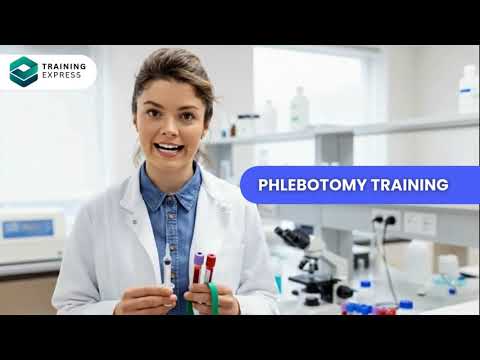
Phlebotomy is our most concise option — a focused introduction to phlebotomy covering venepuncture, anatomy, patient preparation and blood donation basics in around 1 hour 43 minutes. A good starting point if you want a foundational CPD certificate without a long time commitment.
Want a Fuller Grounding in Phlebotomy Practice
Phlebotomy: Phlebotomy Training goes into more depth across 9 modules, around 2 hours 57 minutes, including quality assessment, special blood collection procedures and infection control alongside the core venepuncture content.
Want to Focus Specifically on Venipuncture Technique
Phlebotomy and Venipuncture Training puts extra weight on venipuncture itself — including advanced and adapted techniques for paediatric, geriatric and difficult-vein scenarios — over around 3 hours of content.
Want a Higher-Recognition Credential in Broader Patient Care
Diploma in Nursing Assistant Level 5 is QLS-endorsed alongside its CPD accreditation. It's not a phlebotomy course — it covers patient care, safeguarding, communication and legal standards for nursing assistant roles — but it's a strong pairing for learners who want broader health and social care knowledge alongside their phlebotomy training.
Understanding Phlebotomy Roles in the UK
Phlebotomy is most commonly practised within the NHS, where pay follows the national Agenda for Change structure. As a general guide for 2026/27:
NHS Band 2
Entry-level phlebotomist roles: around £25,272 a year.
NHS Band 3
Senior or experienced phlebotomist roles: roughly £25,760–£27,476 a year.
Private & Agency Roles
Private clinics, GP surgeries and agency work can pay differently, often by the hour, and rates vary by employer and region.
Most phlebotomist roles, including NHS positions, involve employer-led, on-the-job training and supervised competency sign-off in addition to any prior certification. A CPD-certified course like ours is a useful way to build foundational knowledge and demonstrate commitment before you apply — but it sits alongside, not instead of, an employer's own training and assessment process.
Figures are based on published 2026/27 NHS Agenda for Change pay scales. Pay bands are reviewed periodically, so check the latest NHS Employers pay information or current NHS pay circular before relying on these figures.
 Food Hygiene
 Health & Safety
 Safeguarding
 First Aid
 Business Skills
 Personal Development






 Reviews
















Well presented course filled with necessary information..