Food Hygiene
 Health & Safety
 Safeguarding
 First Aid
 Business Skills
 Personal Development

GET THIS COURSE AND 2500+ OTHERS FOR ONLY £49 FIND OUT MORE
Observation Skills for Carers teaches you everything on the topic thoroughly from scratch so you can achieve a professional certificate for free to showcase your achievement in professional life.
Observation is more than simply noticing things — it’s about knowing what to look for, understanding what it means, and recognising when to act. For carers, developing keen observation skills is essential for identifying changes in behaviour, health, and emotional wellbeing across different age groups. This course provides a focused dive into the key aspects of observation skills in health and social care, from child development to health monitoring and social policy contexts.
Each module is purpose-built to strengthen your ability to observe methodically, record accurately, and contribute meaningfully to care decisions. Whether you’re working with children, vulnerable adults, or within health or social services, this course offers a structured approach to improving your observational skills and recording skills with just the right blend of depth and common sense. If you’ve ever thought “something doesn’t seem quite right,” this course will help you put your finger on it and know what to do next.
16 others bought this course in the last 24 hours!
Key Features of the Observation Skills for Carers :
Our trusted, high quality and affordable Observation Skills for Carers trains individuals to become experts in their field.
- Accredited by CPD
- Instant e-certificate and hard copy dispatch by next working day
- Fully online, interactive course with audio voiceover
- Developed by qualified professionals
- Free Certificate Include
- Self-paced learning and laptop, tablet, smartphone-friendly
- 24/7 Learning Assistance
- Discounts on bulk purchases
£21,354 Average Salary, Up to £35,142/yr for this skill according to top UK career sites.
“Observation skills are critical for caregivers to detect early signs of illness, distress, or changes in a patient's condition, enabling timely intervention and better health outcomes.”
—World Health Organization (WHO), WHO is the UN’s global health agency.
Sneak Peek Observational Skills Training
Learning Outcomes
By the end of the observation skills for carers course, learners will be able to:
- Understand the purpose and value of structured observation in care.
- Recognise behavioural and developmental patterns in children through observation.
- Apply various observational skills relevant to care and social work.
- Learn how to plan, document, and reflect on observations clearly.
- Interpret health-related cues through basic clinical observation techniques.
- Identify the role of observation in effective care management decisions.
Why Take This Online Observation Skills for Carers Course
This Observation Skills for Carers online course is designed to sharpen one of the most crucial aspects of caregiving: the ability to notice subtle changes in a person’s condition. From shifts in mood or behaviour to early signs of illness, you’ll gain the confidence to recognise and report issues before they escalate. These skills are vital across care environments—whether supporting older adults, individuals with disabilities, or those living with chronic health conditions.
By taking this Observation Skills for Carers course, you’ll improve your ability to deliver attentive, responsive care and support better outcomes for those you look after. It’s also an excellent step for those already working in care who want to demonstrate greater competency, support their team more effectively, and move towards more senior roles.
Who Should Take The Observation Skills for Carers Course?
Anyone with a knack for learning new skills can benefit from Observation Skills for Carers. While it’s ideal for those aiming to enter or grow in care-related roles, it’s equally valuable for boosting your career and standing out for promotions.
This course is suitable for individuals in various roles, including those listed below:
- Carers seeking to improve observational judgement and awareness.
- Nursery workers needing to track developmental and behavioural signs.
- Health support workers monitoring service users’ day-to-day changes.
- Social care assistants responsible for recording behavioural concerns.
- Anyone supporting vulnerable adults in a care setting or at home.
- Foster carers wanting to better understand emotional or behavioural shifts.
- Teaching assistants supporting early years or special educational needs.
- Individuals exploring entry into health, childcare, or social care roles.
Certification
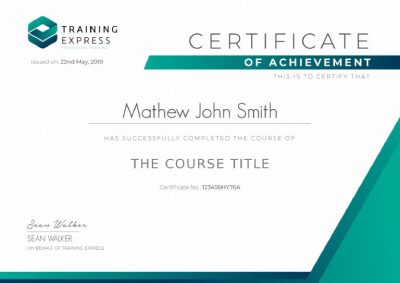
Once you’ve successfully completed your observational skills for carers course, you will immediately be sent a digital certificate. Also, you can have your printed certificate delivered by post (shipping cost £5.99). All of our courses are fully accredited, providing you with up-to-date skills and knowledge and helping you to become more competent and effective in your chosen field. Our certifications have no expiry dates, although we do recommend that you renew them every 12 months.
Accreditation
All of our courses, including this Observational Skills for Carers, are fully accredited, providing you with up-to-date skills and knowledge and helping you to become more competent and effective in your chosen field.
Job Opportunities – Observation Skills for Carers Online Course
The Observation Skills for Carers course equips learners with the ability to monitor, assess, and record behavioural and physical changes in those they care for. Through modules covering child development, health indicators, and clinical monitoring, the course builds a solid foundation of observational skills. Participants explore structured observation methods, documentation techniques, and the role of observation in social policy and healthcare.
Completing this online course offers a range of job opportunities in care settings that value vigilance, accuracy, and empathy. Whether working with children, vulnerable adults, or patients with complex needs, graduates are well-prepared to contribute meaningfully to support teams in healthcare, social care, and early years environments.
Key job opportunities after completing the observation skills course include:
- Domiciliary Care Assistant
- Residential Support Worker
- Healthcare Assistant (HCA)
- Live-in Carer
- Dementia Care Assistant
- Personal Care Aide
- Community Support Worker
Career Path for Observation Skills
Completing the Observation Skills for Carers course can lead to rewarding roles across the care and education sectors. It supports both career entry and progression opportunities.
Below we mention the average salary for some common roles related to this course:
- Childcare Worker – Average Salary £22,000 per year.
- Health Care Assistant – Average Salary £23,500 per year.
- Support Worker – Average Salary £24,000 per year.
- Teaching Assistant (SEN) – Average Salary £20,000 per year.
- Residential Care Officer – Average Salary £27,000 per year.
- Family Support Worker – Average Salary £26,000 per year.
Course Duration and Format
Our Observational Skills for Carers course takes just 2 hours and 4 minutes to complete, making it ideal for busy schedules. Delivered through interactive course modules, the format is engaging and easy to follow, allowing you to learn at your own pace while retaining essential information.
“Observation is the foundation of caregiving; noticing small changes in a loved one’s physical or mental state can prevent complications and ensure proper medical attention.”
—Mayo Clinic (Caregiver Guidelines), healthcare clinic.
Course Curriculum
The detailed curriculum outline of our Observation Skills for Carers is as follows:
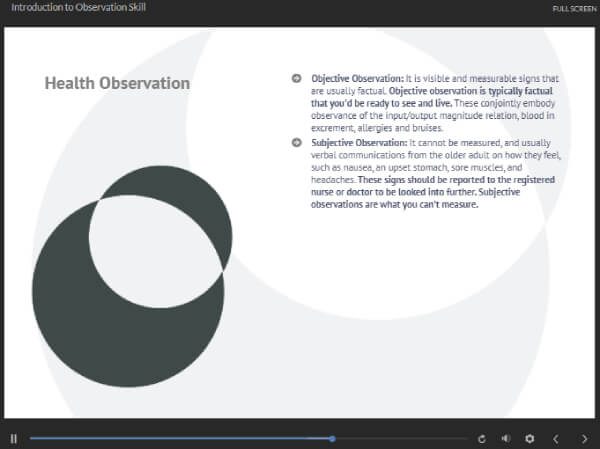
Module 01: Introduction to Observation Skill
In module one, we will learn about the key skills required for effective minute taking, as well as the role of the chairperson and Minute-Taker in detail. It also explores the stages of minute taking and steps to arranging a meeting.
Module 02: Child Observation
In module two, we will learn how to prepare for a meeting, exploring what should be included in the meeting agenda and the rules for seating arrangements. It also includes tips on how to deal with a stressful meeting and what to do when a conversation goes off-track.
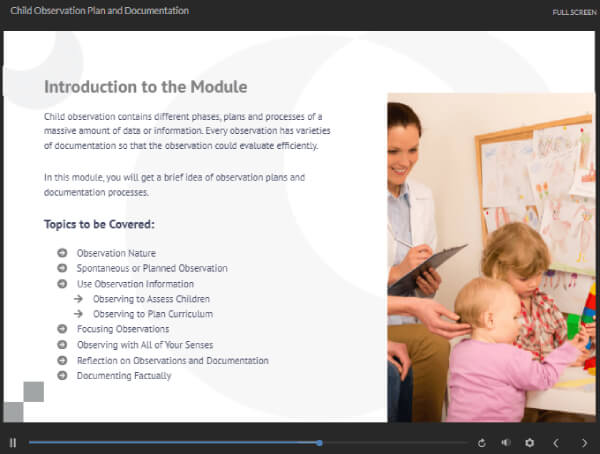
Module 03: Child Observation Plan and Documentation
In module three, we will explore the structure of a meeting, covering key topics such as meeting introductions, committee business, matters arising, and action items. It also provides step-by-step guidance on how to successfully close a meeting,
Module 04: Observational Methods and Studies
In module four, we will be introduced to the Action Triangle, exploring what to do when there is no outcome from a meeting, as well as when there is several actions for one minute.
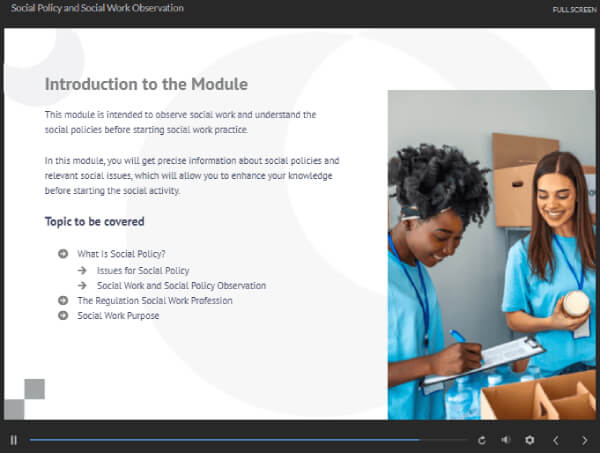
Module 05: Social Policy and Social Work Observation
In module five, we will explore the skills required to be a successful Minute-Taker, taking an in-depth look at best practice procedures for before, during and after a meeting. You will also learn how to structure your notes and make them as clear as possible.
Module 06: Basic Health Observation
In module six, we will learn a wide range of tips from the experts, from how to sharpen your active listening skills to step-by-step guidance on how to create a Minutes template. It includes what information should be recorded during a meeting and what should be left out.
Module 07: Technology in Minute Taking
In module seven, we will explore some technological advancements in minute taking, with information on how to streamline your minute taking, security issues, and software solutions.
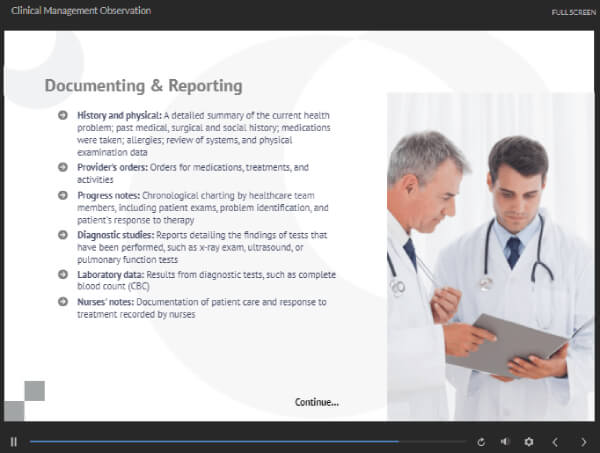
Module 07: Clinical Management Observation
In module eight, we will focus on professional development training, with tips and guidance on how to create the right impression, address the attendees of a meeting, deal with challenging situations, and much more.
Observational Skills for Carers Course Reviews
FAQs About Observation Skills for Carers Course
How can I improve my observation skills?
Improving observational skills starts with being fully present and paying attention to detail. Practice by slowing down, actively noticing changes in people’s behaviour, environments, or routines. Keep a daily journal to track what you observe—it sharpens memory and awareness. Focus on non-verbal cues, such as facial expressions or body language, especially in care settings. Mindfulness and active listening also enhance observational ability.
For a structured approach, completing our Observation Skills for Carers course can significantly boost your ability to spot subtle signs of distress or changes in wellbeing. This training helps you support others more effectively by developing a keen eye for detail—an essential skill in caregiving. Start improving today and make a real difference.
How can observation skills help prevent discrimination?
Strong observation skills can play a key role in preventing discrimination by allowing individuals to recognise subtle signs of bias or unfair treatment early. By paying close attention to behaviours, body language, and interactions, observers can identify patterns that may signal discrimination—such as exclusion, stereotyping, or unequal opportunities. Early detection helps prompt timely intervention, whether through support, reporting, or initiating inclusive dialogue. Observation also promotes empathy, helping people better understand diverse perspectives. In workplaces, schools, or public settings, trained observers can help create safer, more equitable environments by noticing what others might overlook. Developing this skill supports a proactive approach to inclusivity and helps build a culture where respect and fairness are prioritised.
How can observation skills promote equality and diversity?
Observation skills help promote equality and diversity by allowing individuals to notice subtle behaviours, interactions, and patterns that may indicate bias, exclusion, or unfair treatment. By being observant, professionals can identify when someone feels left out, experiences discrimination, or lacks equal opportunities. This awareness enables early intervention, encourages inclusive practices, and supports fair treatment for all. In diverse environments—such as schools, workplaces, or healthcare settings—keen observation helps create a culture of respect and belonging. It also supports personalised care and communication by recognising individual needs, backgrounds, and preferences. Ultimately, observation leads to informed decisions that uphold dignity, challenge stereotypes, and foster a more inclusive and equitable environment for everyone.
What is the importance of observation skills in health and social care?
Observation skills are vital in health and social care because they help professionals detect early signs of physical or emotional changes in individuals. These skills ensure accurate assessments, timely interventions, and personalised support. For example, noticing changes in appetite, mood, or mobility can help prevent serious issues like malnutrition, depression, or falls. Effective observation also supports safeguarding, especially when individuals cannot communicate their needs. Care workers who observe well can report concerns quickly, follow care plans accurately, and maintain high standards of care. In short, observation skills lead to better outcomes, improved patient safety, and higher quality of care—making them essential in any health or social care setting.
Is observation a skill?
Yes, observation is a skill—and a highly valuable one. It involves more than just seeing; it requires focus, attention to detail, and the ability to interpret what you notice. Strong observation skills help you pick up on patterns, read body language, and detect subtle changes in environments or behaviours. Whether you’re in healthcare, education, law enforcement, or customer service, being observant improves decision-making, problem-solving, and communication. Like any skill, it can be developed through practice—by staying present, asking questions, and reflecting on what you see. In today’s data-driven world, mastering observation helps bridge the gap between information and insight, making it a key asset in both personal and professional settings.
What jobs can I get with observation skills and knowledge?
If you have strong observation skills and solid knowledge in your field, you can excel in many roles across different industries. Careers such as security officer, crime scene investigator, quality control inspector, social worker, teacher, and healthcare assistant all rely on attention to detail and keen observation. Jobs in research, journalism, and data analysis also benefit from the ability to notice patterns and interpret subtle clues. Employers value individuals who can identify problems early, assess situations accurately, and make informed decisions. Enhancing your observational skills with relevant training or certifications—like safeguarding, health and social care, or investigation courses—can further improve your employability and job prospects across both public and private sectors.
What is the average salary for observational skills in the UK?
The average salary for jobs requiring strong observation skills in the UK varies by industry and role. For example, professionals like healthcare assistants, security personnel, and early years practitioners often rely on sharp observational abilities. On average, roles demanding observation skills earn between £21,000 and £30,000 per year. More specialised positions—such as clinical observers or behavioural analysts—can earn upwards of £35,000 annually. Salaries also depend on location, experience, and qualifications. Employers value observation skills for safety, accuracy, and efficiency, making them a sought-after soft skill in fields like healthcare, education, law enforcement, and customer service. Improving these skills through training can increase job opportunities and earning potential in the UK job market.
Will I receive a certificate after completing this course?
Yes, you will receive a FREE Digital Certificate after completing this observation skills training.
However, if you want, you can also order the Digital Transcript, Hardcopy Certificate & Transcript.
Ordering page link: https://www.trainingexpress.org.uk/certificate/
How do I purchase this course?
1. Click on ‘Take This Course’ button, and you will be directed to your Cart.
2. You can update the course quantity and remove any unwanted items in the Cart, and after that, click on the ‘Checkout’ option and enter your billing details.
3. Once the payment is made, you will receive an email with the login credentials, and you can start learning after logging into the portal.
You can take this course or find any course from the Courses section of our website.
Course Curriculum
| Observation Skills for Carers | |||
| Module 01: Introduction to Observation Skill | 00:17:00 | ||
| Module 02: Child Observation | 00:12:00 | ||
| Module 03: Child Observation Plan and Documentation | 00:16:00 | ||
| Module 04: Observational Methods and Studies | 00:19:00 | ||
| Module 05: Social Policy and Social Work Observation | 00:13:00 | ||
| Module 06: Basic Health Observation | 00:28:00 | ||
| Module 07: Clinical Management Observation | 00:19:00 | ||

SAVE 84% - OFFER ENDS SOON
£125.00Original price was: £125.00.£20.00Current price is: £20.00. ex Vat- 1 year
- Intermediate
- Course Certificate
- 2 hours, 4 minutes Gift this course
Buying more than one of the same courses?
- 50% discount for orders of 10+ courses
- 60% discount for orders of 50+ courses
- 70% discount for orders of 100+ courses
Looking for a more personalised package?
contact us nowInstructors