Diploma in Food Hygiene and Safety Level 3

4.9 (18 REVIEWS)
55 STUDENTS

GET THIS COURSE AND 2500+ OTHERS FOR ONLY £49 FIND OUT MORE

Diploma in Food Hygiene and Safety at QLS Level 3 Course teaches you everything on the topic thoroughly from scratch so you can achieve a professional certificate for free to showcase your achievement in professional life. This Diploma in Food Hygiene and Safety at QLS Level 3 Course is a comprehensive, instructor-guided course, designed to provide a detailed understanding of the nature of the related sector and your key roles within it.

To become successful in your profession, you must have a specific set of skills to succeed in today’s competitive world. In this in-depth training course, you will develop the most in-demand skills to kickstart your career, as well as upgrade your existing knowledge & skills.

The training materials of this course are available online for you to learn at your own pace and fast-track your career with ease.

Sneak Peek

Who should take the course

Anyone with a knack for learning new skills can take this Diploma in Food Hygiene and Safety at QLS Level 3. While this comprehensive training is popular for preparing people for job opportunities in the relevant fields, it also helps to advance your career for promotions.

Certification

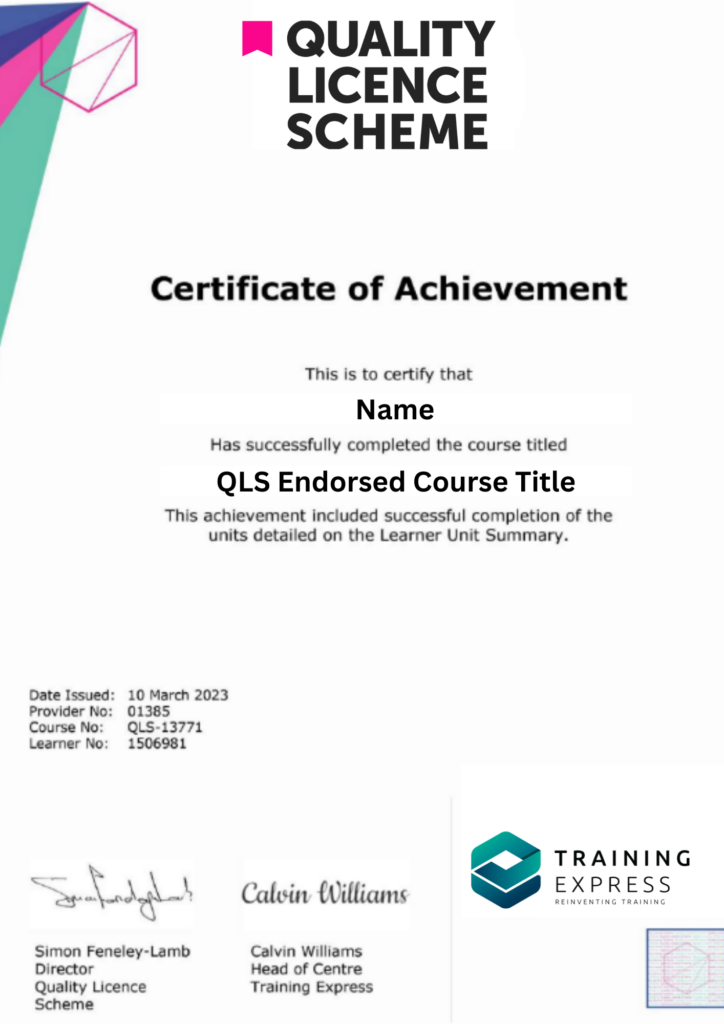
After completing this QLS course, learners can order an endorsed certificate to prove their achievement. The Quality Licence Scheme approves this certificate of achievement. You can have endorsed certificates delivered to your home via post for just £79.

Also, once you’ve completed your course, you will immediately be sent a CPD Accredited FREE Digital Certificate. You can have your FREE printed CPD Accredited Certificate delivered by post (shipping costs £5.99). 

Quality Licence Scheme

Endorsement

The Quality Licence Scheme has endorsed this course for its excellent non-regulated provision and training programs. However, it is not an accredited qualification and is not regulated by Ofqual. If you require further recognition, such as progression into higher education, your training provider can offer advice. You may also refer to the Learner FAQs on the Quality Licence Scheme website for more information.

Course Contents

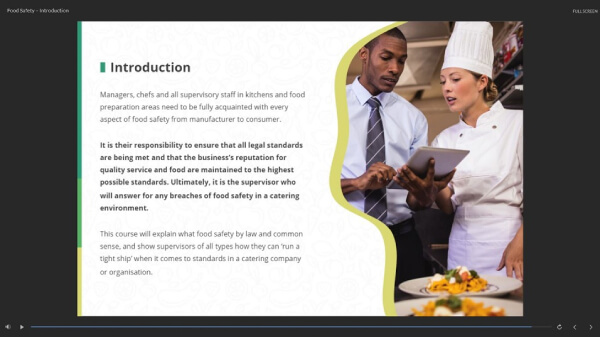
This introductory module will draw your attention to the world of food safety. You’ll learn about the food-borne illnesses and its causes, the vulnerable risk groups, and the key terms which will help you to understand food safety and its importance.

The food safety management system, HACCP and its fundamental principles, detail discussion of the implementation of HACCP, and HACCP based food safety management system – these are the keynotes of this module 4.

As the name suggests, this particular module is dedicated to giving you an overview of the key legislation, concerning authorities to enforce the law, code of practices, fines and prosecution, and due diligence.

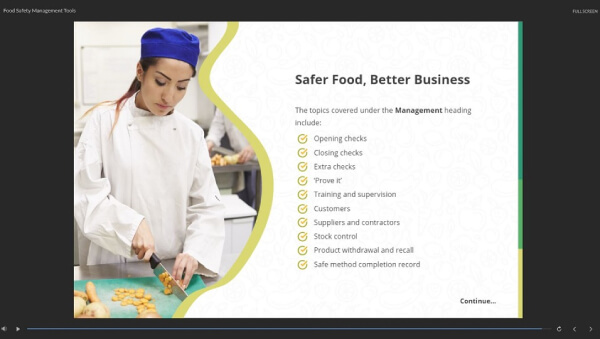
The highlighted part of module is a vivid discussion on the various food safety management tools. Along with this, learners will also get to know about the management responsibilities and the importance of documenting the food safety system.

This module will tell you everything that you need to know about the roles and responsibilities of a supervisor. Along with the in-depth knowledge of supervisory skills and styles, you’ll also learn about food safety cultures, standards, food safety policies, and quality assurance & control.

In module 6, we’ll give you a tour of Microbiology. In this voyage, you will come across the detail of bacteria and factors responsible for its multiplication, moulds, yeasts, viruses, protozoa, and cyclospora.

From knowing the sources of contamination to understand the processes of detecting contamination – all will be discussed in module 7. You’ll also learn about various types of contamination hazards, vehicles of contamination, and cross-contamination.

This module will shed light on the control of different contamination hazards and the role of the supervisor in the prevention of contamination. Food storage, food preparation and cooking, and food service and delivery are some of the other key topics of this eighth module.

After a brief discussion on food poisoning, this module will draw your attention to the most common causes of food poisoning, food-borne illness, and food-borne viruses. Each of the topics will be discussed in detail.

In this module; you will learn about chemical food poisoning, metallic food poisoning, scombrotoxic fish poisoning, paralytic shellfish poisoning and diarrhetic shellfish poisoning, and the generic control measures for most food poisoning organisms.

In module, we will learn what a food allergy is, exploring the 14 major types of allergens, as well as the difference between food allergies and intolerances. It also provides essential information on how to treat anaphylactic shock.

In module, we will gain a deeper understanding of the different types of food allergens and how to read food labelling information. It also discusses allergen requirements for food businesses.

In module, we will explore food allergens in the vegan diet, with tips on how to order food and takeaways safely. It also provides guidance on how to create allergen-friendly meals at home.

This module will cover the wide area of food and temperature control. Some of the key topics from this module are safe temperatures, fridge & freezer temperature, cooking temperatures, and time without temperature control.

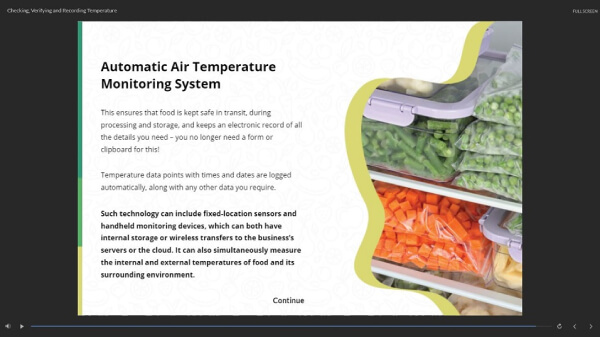
Module 13 will introduce you with the different equipment and process of measuring food temperature. You’ll also learn about when food temperature should be measured and the recording of temperature checks.

This module explains the common signs of food spoilage and prevention methods along with the different approaches to food preservation. Delivery and unloading of raw materials, wrapping and packaging, and stock rotation will also be discussed in this module.

The design, construction, and maintenance of food premises and equipment are essential for maintaining food safety. This module will tell how you can go with these factors to maintain the high standard of food safety.

Waste storage and the removal of waste, cleaning equipment, disinfection, and the procedures and methods of cleaning will be highlighted in this module. Learners will also familiarise with the in-houses and contract cleaning, and the role of the supervisor in cleaning.

The module will look at different types of pests, contamination caused by pests, and the standard control measures. A due-diligence defence and the role of the supervisor in pest control will also be discussed here.

In this module, you will learn about the general principle of food labelling that covers a range of topics, such as: food supplement, fortified food, alcoholic beverage labelling, and nutrition and health claims.

In this module, you will learn about different components of food labelling such as: food identity, ingredient lists, quantitative ingredient declaration, food additives, labelling allergenics ingredients, and date marketing.

In this module, you will learn about nutrition labelling and the importance of information regarding nutrition labelling, mandatory nutrition labelling, alternative formats for providing nutrition labels, presentation of information.

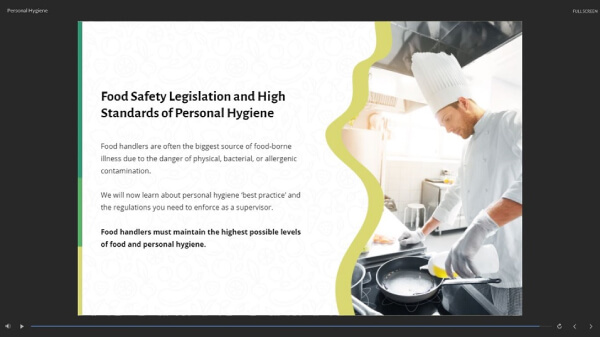
This module will tell you about the high standards of personal hygiene, the relevant law and the role of the supervisor in personal hygiene. You’ll also learn about the hazards that come from food handlers.

This final module will draw the curtain on the course by explaining the importance of training for maintaining the high standard of food safety. You’ll also learn about the training methods and the role of management in it.

In the final module  you will familiarize with all the new practices that have recently emerged to adapt to the new normal. You will learn in detail about the standard hygiene and safety practices needed to be followed to minimize the risk of contamination of COVID-19.

Course Curriculum

Diploma in Food Hygiene and Safety at QLS Level 3
Module 01: Introduction to Food Safety and Hygiene 00:30:00
Module 02: Food Safety Management System and HACCP 00:44:00
Module 03: Food Safety and Food Hygiene Legislation 00:34:00
Module 04: Food Safety Management Tools 00:30:00
Module 05: Supervision of Food Safety and Hygiene 00:37:00
Module 06: Microbiology 00:28:00
Module 07: Contamination Hazards 00:28:00
Module 08: Controlling Contamination 00:39:00
Module 09: Food Poisoning (Bacterial) and Food-Borne Illness 00:32:00
Module 10: Food Poisoning (Non-Bacterial) 00:32:00
Module 11: Basics of Food Allergens 00:13:00
Module 12: Allergen Guidance for Food Businesses 00:22:00
Module 13: Allergen Guidance for Consumers 00:14:00
Module 14: Food and Temperature Control 00:34:00
Module 15: Checking, Verifying and Recording Temperature 00:25:00
Module 16: Food Spoilage and Preservation 00:38:00
Module 17: Food Premises and Equipment: The Design and Construction 00:35:00
Module 18: Waste Disposal, Cleaning and Disinfection 00:35:00
Module 19: Pest Management 00:29:00
67 Illustrator Symbols- 00:12:00
Module 21: Components of a Food Label 00:20:00
Achieve the best learning experience 00:02:00
Module 23: Personal Hygiene 00:30:00
Module 24: Food Safety and Hygiene Training for the Staff 00:29:00
Module 25: Food Safety and Hygiene During Covid-19 00:11:00
Assignment
Assignment – Diploma in Food Hygiene and Safety at QLS Level 3 2 weeks, 1 day
Get Your QLS Endorsed Certificate
Get Your QLS Endorsed Certificate 00:00:00
Transcript and Certificate
Trust Pilot Review 00:00:00
Transcript and Certificate 00:00:00
Diploma in Food Hygiene and Safety Level 3
ex Vat

SAVE 84% - OFFER ENDS SOON

TAKE THIS COURSE
  • Original price was: £125.00.Current price is: £20.00. ex Vat
  • 1 year
  • Course Certificate
  • 2 weeks, 1 day
  • Gift this course
£20 /Unit Price
Total:
£100.00
Quantity:

Buying more than one of the same courses?

  • 50% discount for orders of 10+ courses
  • 60% discount for orders of 50+ courses
  • 70% discount for orders of 100+ courses

Looking for a more personalised package?

contact us now

Instructors

55 STUDENTS ENROLLED