Designated Safeguarding Lead (DSL)

4.9 (626 REVIEWS)
1632 STUDENTS
BestsellerGreat ServiceHighly RatedTrending

GET THIS COURSE AND 2500+ OTHERS FOR ONLY £49 FIND OUT MORE

The Designated Safeguarding Lead- DSL Training Course is ideal for those who work in the health or social care sector, as well as anyone with child or vulnerable adult safeguarding responsibilities. It explores key legislation, how to identify abuse and report safeguarding concerns.

Through case studies and practical exercises, you will develop all the skills you need to ensure the welfare of children and vulnerable adults under your care or supervision. You will learn about safeguarding responsibilities, the different types of abuse, child sexual exploitation, and what to include in a safeguarding report.

This Designated Safeguarding Lead- DSL Course also includes step-by-step guidance on how to respond to disclosure and share private information, as well as what action to take after a safeguarding referral. To ensure flexible learning, this course is designed for both part-time and full-time students. You can become accredited in just few hours, with the freedom to study at your own pace.

Last audited and updated on: 29th October 2026

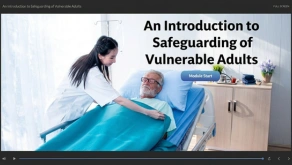
Sneak Peek

Sneak Peek of Designated Safeguarding Lead (DSL)

Learning Outcomes

By the end of the course, learners will be able to:

What is a Designated Safeguarding Lead (DSL)?

A designated safeguarding lead is the person with lead responsibility for safeguarding and child protection in a school, college, nursery or other organisation. They are the first point of contact for staff with concerns, decide when to refer to children’s social care or the police, keep safeguarding records and make sure colleagues are trained and supported.

Who Should Take DSL Training Course

This Designated Safeguarding Lead- DSL Training Course is ideal for those who work in roles that involve child or adult safeguarding responsibilities, such as the following:

Assessment

At the end of the Designated Safeguarding Lead- DSL Course, there will be an online assessment, which you will need to pass to complete the course. Answers are marked instantly and automatically, allowing you to know straight away whether you have passed. If you haven’t, there’s no limit on the number of times you can take the final exam. All this is included in the one-time fee you paid for the course itself.

CPD Accredited

All of our courses are accredited by the CPD Certification Service as conforming to universally accepted Continuing Professional Development (CPD) guidelines.

RoSPA Membership

RoSPA Membership recognises commitment to health and safety excellence, offering guidance, resources, and credibility to organisations aiming to reduce risks and improve workplace safety standards.

British Safety Council Member

A British Safety Council Member demonstrates commitment to high health, safety, and wellbeing standards, promoting best practices and safer workplaces across industries.

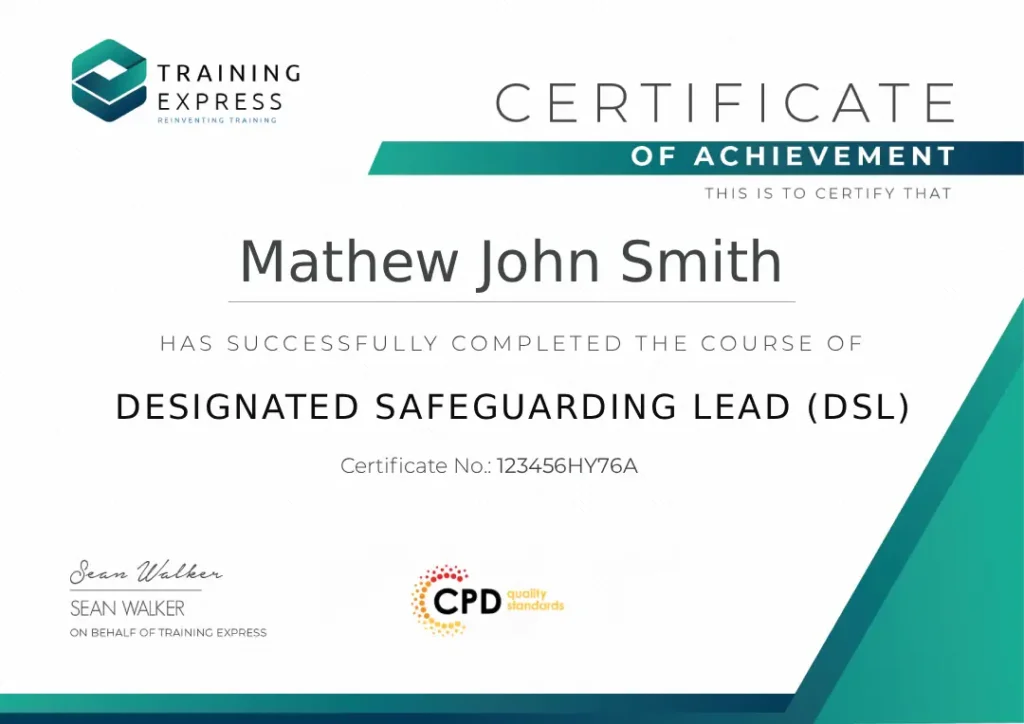
Certification

Once you’ve successfully completed your course, you will immediately be sent a digital certificate. Also, you can have your printed certificate delivered by post (shipping cost £5.99). All of our courses are fully accredited, providing you with up-to-date skills and knowledge and helping you to become more competent and effective in your chosen field.

Designated Safeguarding Lead (DSL) Certification
↻
Recommended renewal: 3 years.
Our certifications have no expiry dates, but we recommend renewing them to stay up to date with industry best practices.
Course Curriculum

Safeguarding Vulnerable Adults

In Module one, we will focus on what safeguarding vulnerable adults involves and detail the basic things we need to know about safeguarding.

In module two, we will start to look into the key legislations and why they are relevant to safeguarding as well as the key points to each act. 

In module three, we will look into more detail about what constitutes as abuse or neglect and learn how to recognise the signs of abuse.

In module four we will look at the responsibilities that you will have in ensuring a vulnerable adults safety and wellbeing.

In module 5, we will look at communication methods within a care setting, and why it is important to build respectful and trusting relationships.

In module six, we will look at how we respond to a safeguarding concern.We will learn how we share the information we have, and who to report your concerns to. 

In module seven, we will look at your responsibilities when raising a concern in more depth. 

You will learn the specifics of what you must report and when and how you should do so.

Safeguarding Children

In module one, we will learn what safeguarding means and why children may require safeguarding. It explores key safeguarding practices and principles.

In module two, we will get an in-depth understanding of child safeguarding laws, exploring key legislation and guidance. It covers the fundamental principles of The Children Act 1989.

In module three, we will learn about the different types of child abuse and neglect, taking a look at both emotional and physical abuse. We will also learn how to identify the signs of abuse, through case studies and audio-visual guidance.

In module four, we will take a detailed look at the different types of child sexual exploitation and their impact on children. We will also learn how to identify the signs of sexual exploitation in children.

In module five, we will learn what to do when a child makes a disclosure and how to handle that personal information. It also discusses why children may be reluctant to make a disclosure.

In module six, we will be guided through each step of the child safeguarding risk assessment and will learn how to identify child protection and safeguarding risk.

In module seven, we will learn what should be included in a child safeguarding referral and how to report a child at risk of harm. It explores action to be taken after a referral to child’s social care.

In this final module, we will explore best practice procedures for child safeguarding record-keeping, why record keeping is important and how to fill out a safeguarding report.

Course Reviews

Excellent

4.8 Average 626 Reviews

  Reviews

Jane D
📍GB
Excellent modules that give practice for mock exam and a chance to take your time over studies.
Jessica
📍GB
Great website at great prices. lots of different courses to choose from.
Stephen Jenner
📍GB
This so easy to use and everything is well explained and everyone should use it.
Ms. Angela Curtis
📍GB
Clear language. Photos accompanying content. Ability to go back and forth between pages. Save where you got to and pick up from same place when you return. Nice that you can do a Mock exam before the Final. Have 2 more courses to complete on this platform. Thank you Training Express. No complaints!

FAQs About DSL Training

What training does a designated safeguarding lead need?

DSL training should cover the law and statutory guidance, the signs of abuse and neglect, responding to disclosures, making referrals, sharing information and keeping records. This designated safeguarding lead training covers all of these across 15 modules, for both children and adults at risk.

What level is DSL training?

Designated safeguarding lead training is usually Level 3, which is the level of this course. If you oversee safeguarding across a whole service, or want more on adults at risk, the Mental Capacity Act and DoLS, our Safeguarding Level 4 course is the next step.

Can you be a DSL without training?

You shouldn’t be. Keeping children safe in education expects DSLs and their deputies to complete training that gives them the knowledge and skills for the role. There is no single qualification you must hold, but your employer will expect your DSL training to be in place and up to date.

How often should DSL training be renewed?

DSLs and deputies are expected to update their DSL training at least every three years and refresh their knowledge at least once a year, for example through briefings, reading or short updates.

Can I do DSL training online?

Yes. This DSL training is fully online and self-paced, so you can study around work on a laptop, tablet or phone and pick up where you left off. It suits DSLs and deputies in schools, early years settings and childminding, as well as health and social care. Some local safeguarding partnerships also run their own sessions, so check what your area expects.

How much does DSL training cost?

Prices vary by provider and format, and classroom or live virtual courses usually cost more than online ones. This online DSL course costs £20 + VAT, includes a free digital certificate when you pass, and has bulk discounts for teams of 10 or more.

Course Curriculum

Safeguarding Vulnerable Adults Training
Module 01: An Introduction to Safeguarding of Vulnerable Adults 00:15:00
Module 02: Safeguarding Legislations 00:25:00
Module 03: Understanding Abuse and Neglect 00:25:00
Module 04: Safeguarding Vulnerable AdultsPolicy, Roles and Responsibilities 00:23:00
Module 05: Understanding the Importance of Communication in Care 00:20:00
Module 06: Sharing Information and Responding To a Disclosure 00:20:00
Module 07: Reporting Your Concern 00:17:00
Safeguarding Children
Module 01: Introduction to Safeguarding 00:21:00
Module 02: Laws and Guidance 00:42:00
Module 03: Child Abuse 00:48:00
Module 04: Child Sexual Exploitation 00:39:00
Module 05: Responding to Disclosure and Reporting 00:32:00
Module 06: Risks and Risk Assessment 00:16:00
Module 07: Things to Do after Referral 00:22:00
Module 08: Record Keeping 00:17:00
Mock Exam
Mock Exam – Designated Safeguarding Lead (DSL) 00:20:00
Final Exam
Final Exam – Designated Safeguarding Lead (DSL) 00:20:00
Transcript and Certificate
Share Your Feedback 00:00:00
Get Your Certificate 00:00:00
Designated Safeguarding Lead (DSL)
ex Vat

SAVE 84% - OFFER ENDS SOON

TAKE THIS COURSE

Or

  • Original price was: £125.00.Current price is: £20.00. ex Vat
  • 1 year
  • Course Certificate
  • 7 hours, 2 minutes
  • Gift this course
£20 /Unit Price
Total:
£100.00
Quantity:

Buying more than one of the same courses?

  • 50% discount for orders of 10+ courses
  • 60% discount for orders of 50+ courses
  • 70% discount for orders of 100+ courses

Looking for a more personalised package?

contact us now

Instructors

1632 STUDENTS ENROLLED
top