Food Hygiene
 Health & Safety
 Safeguarding
 First Aid
 Business Skills
 Personal Development

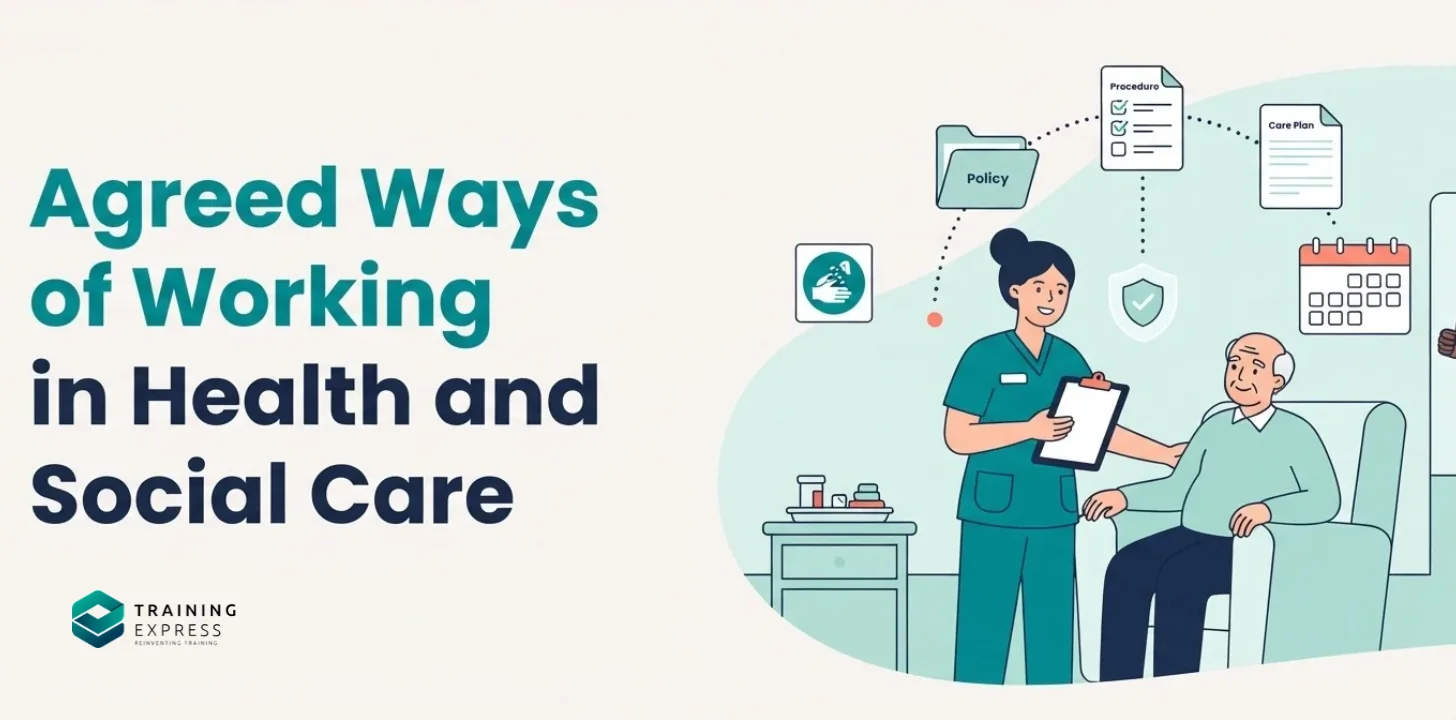

Agreed ways of working in health and social care are the policies, procedures and expectations your employer has set for how you do your job. They include written documents, such as policies and care plans, and less formal routines that everyone in your team follows. Working to them keeps the people you support safe and protects you.
If you’re working towards the Care Certificate or a Level 2 or 3 diploma, you’ll be asked about agreed ways of working. This guide explains what the term means, where agreed ways of working come from, real examples for everyday tasks, and what each assessment criterion is asking you to show.
Table of Contents
What does "agreed ways of working" mean?
Agreed ways of working means everything your employer expects you to do, and how they expect you to do it. The Care Certificate glossary, from Skills for Care and its partners, explains that this covers formal policies and procedures, and also ways of working that are less formally written down.
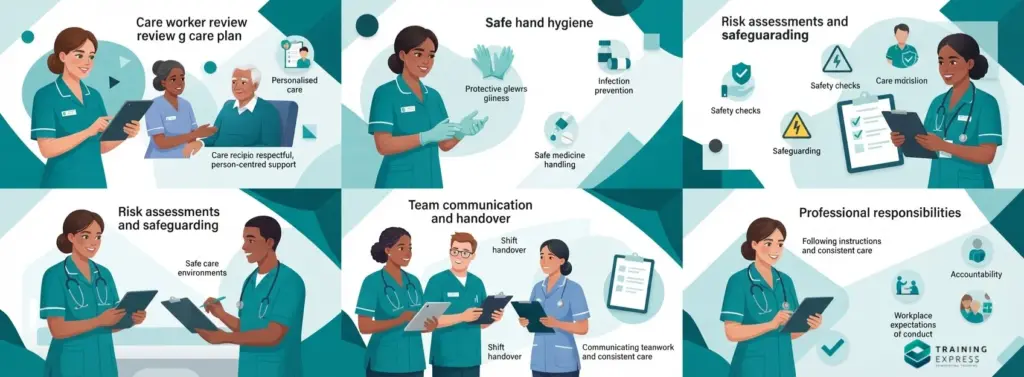
In plain words, agreed ways of working are “how we do things here”. They usually include:
- policies: your employer’s position on a topic, such as safeguarding or infection control
- procedures: the step-by-step actions for a task, such as giving medicines
- care plans and risk assessments: how to support each individual person
- your job description: what is and isn’t part of your role
- national guidance your employer has adopted, such as NICE guidance
- team routines, such as how handover works on your shift.
The word “agreed” matters. It means your employer has set these ways of working, and you’ve accepted them as part of your job.
Agreed ways of working vs policies and procedures
Policies and procedures are part of your agreed ways of working, but agreed ways of working is the wider term. It also includes care plans, job descriptions and informal team routines. For the difference between a policy and a procedure, read our guide to the difference between policy and procedure.
Where agreed ways of working come from
Agreed ways of working come from the law, national guidance and your employer’s own decisions, and they end up in the care plan for each person. Each level builds on the one before.
- The law. For example, the Health and Social Care Act 2008 and its regulations set the fundamental standards that registered care providers in England must meet.
- National guidance and codes. Bodies such as NICE (the National Institute for Health and Care Excellence) publish guidance. The Code of Conduct for Healthcare Support Workers describes how you should behave.
- Your employer’s policies. Your employer turns the law and guidance into policies for its own service.
- Procedures. Each policy is backed by step-by-step procedures.
- The person’s care plan. The plan says how to support each individual, based on their needs and choices.
- Your job description and training. These set what you’re trained and allowed to do.
For the full set of policies a care home usually has, see our care home policies and procedures list. For how policies work in care more widely, read our guide to policies and procedures in health and social care.
Examples of agreed ways of working in care
The best way to understand agreed ways of working is to look at real tasks. These are typical examples. Your employer’s own policies and the person’s care plan always come first.
| Task | Agreed way of working (typical example) | Where it's written |
|---|---|---|
| Giving medication | Only give medicines listed on the medication administration record (MAR). Check the right person, medicine, dose, time and route before you give it, then sign the MAR straight away. | Medicines policy, MAR chart |
| Moving and handling | Follow the person's moving and handling plan. Only use a hoist you're trained on, and check the hoist and sling are in date for inspection before use. | Moving and handling risk assessment |
| Personal care | Get consent first, close doors and curtains, and follow the person's preferences in their care plan. | Care plan, dignity policy |
| Infection prevention | Wash your hands before and after care, and wear the PPE your policy sets out for each task. | Infection control policy |
| Record keeping | Write factual, dated notes at the end of each visit or shift, using the agreed system. | Record keeping policy |
| Confidentiality | Only share information with people who need to know, and never on personal social media. | Confidentiality policy |
| Safeguarding | Report concerns to the person in charge the same day, and record what you saw, not what you think. | Safeguarding policy |
| Lone working | Log in and out of each visit, and follow the check-in procedure if you're running late. | Lone working policy |
| Healthcare tasks | Only carry out tasks, such as checking blood sugar, after training and a competency sign-off. | Delegated tasks procedure |
| Accidents and falls | Don't lift someone off the floor alone. Check for injury, call for help and follow the falls procedure. | Falls policy |
Lifting equipment used to lift people, such as hoists and slings, must have a thorough examination at least every 6 months under the Lifting Operations and Lifting Equipment Regulations 1998 (LOLER). Your employer arranges this, but you should check the inspection date before use.
Why it is important to work in ways agreed with your employer
Working to agreed ways of working keeps people safe, makes care consistent and protects you. It’s also how your employer shows CQC that it meets the law.
- It keeps people safe. Policies are based on the law and best practice, so following them reduces the risk of harm.
- It makes care consistent. Everyone supports the person the same way, whoever is on shift.
- It respects the person’s choices. Care plans record how each person wants to be supported.
- It protects you. If something goes wrong, you can show you followed the agreed way of working.
- It helps your employer meet the law. In England, CQC checks that registered providers meet the fundamental standards.
- It builds trust. People who use services and their families know what to expect.
It’s closely linked to your duty of care in health and social care.
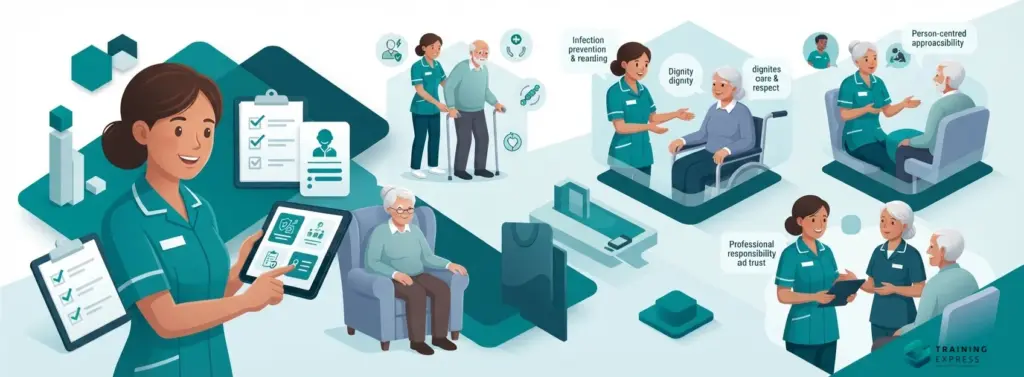
How to access full and up-to-date agreed ways of working
You can usually find your agreed ways of working in your staff handbook, policy folder, online policy system and each person’s care plan. If you can’t find something, ask your manager.
- Staff handbook or policy folder: most services keep a paper or online set of policies.
- Online systems: many employers use a digital care planning or policy app.
- Care plans: read the care plan before you support someone, and check for updates.
- Supervision and team meetings: this is where changes are explained.
- Training: your induction and refresher training, including your statutory and mandatory training.
- Your manager or senior on shift: if in doubt, ask before you act.
Agreed ways of working change when the law, guidance or a person’s needs change. Check you’re using the latest version, not an old printout.
What if an agreed way of working seems wrong?
If an agreed way of working seems wrong, unsafe or out of date, raise it. Don’t work around it on your own, even if you think you know a better way.
- Keep the person safe. If there’s an immediate risk, get help from the person in charge. In an emergency, call 999.
- Raise it with your manager or senior on shift. Explain what worries you and why.
- Record your concern. Write down what you raised, when and with whom.
- Use supervision. Agree whether the policy, procedure or care plan needs updating.
- Escalate if nothing happens. Go to a more senior manager or your safeguarding lead.
- Use whistleblowing if it’s unsafe. If you believe people are at risk and it isn’t being dealt with, follow your whistleblowing policy. Whistleblowing law protects workers who report concerns in the public interest.
Sometimes the issue is a clash with what the person wants. For example, the care plan says two carers for a transfer, but the person asks you to help them alone because your colleague is late. Explain kindly why you need to wait, offer what you can safely do now, and tell the person in charge. If the plan no longer fits the person’s wishes, it should be reviewed. Our guide to professional boundaries in health and social care covers similar grey areas.
What happens if you don't follow agreed ways of working?
Not following agreed ways of working can put people at risk and lead to action at work. How serious it is depends on what happened and why.

- Risk to people: missed or wrong medicines, falls, infections or a safeguarding concern being missed.
- Action at work: extra supervision and training, or a disciplinary process under your employer’s policy.
- Safeguarding referral: if someone was harmed or put at risk.
- CQC findings: if staff regularly don’t follow policies, CQC may find the service isn’t meeting the fundamental standards.
If you make a mistake, report it straight away. Being open helps the person get the right support and helps your employer put things right.
Agreed ways of working and the Care Certificate and diplomas
Agreed ways of working come up in the Care Certificate and in care diplomas. The table explains what each verified criterion asks and what a good answer includes. Always use examples from your own workplace in your answers.
Care Certificate (standards updated March 2025)
| Criterion | What it asks | A good answer covers |
|---|---|---|
| 1.1c | Demonstrate that you're working in line with your employer's agreed ways of working | Your assessor observing you follow a policy, procedure or care plan, for example a medication round or personal care |
| 1.2c | Explain why it's important to work in ways agreed with your employer | Safety, consistency, the person's choices, protecting yourself and meeting the law, linked to a real example |
| 1.2d | Demonstrate how to access full and up-to-date agreed ways of working | Showing where you find policies and care plans, and how you check they're current |
| 13.5a | Describe the agreed ways of working for medication | What your role allows, the checks you make and how you record them |
| 13.5b | Describe the agreed ways of working for healthcare tasks | Which tasks you can do after training and sign-off, and what you must refer to a nurse or senior |
Criterion codes and wording are from the 2025 Care Certificate standards published by Skills for Health and partners.
Learn more with Training Express
If you’re new to care or preparing for your Care Certificate assessment, our Care Certificate Course: Standards (1 to 15) covers the theory behind the standards, including understanding your role.
Frequently Asked Questions (FAQs)
What does "agreed ways of working" mean?
Agreed ways of working are the policies, procedures and expectations your employer has set for how you do your job. They include written documents, such as policies, procedures, care plans and your job description, and less formal team routines. Skills for Care’s Care Certificate glossary includes both formal and less formally documented ways of working in the definition.
Can you give me an example of an agreed way of working in your workplace and why is it important?
A common example is the medicines procedure. You only give medicines listed on the person’s MAR chart, check it’s the right person, medicine, dose, time and route, and sign the record straight away. It’s important because it prevents medication errors, keeps the person safe and shows your employer meets the law. For your assessment, use an example from your own workplace.
What are the 6 C's in social care?
The 6 Cs are care, compassion, competence, communication, courage and commitment. NHS England introduced them in 2012 in its Compassion in Practice strategy for nurses, midwives and care staff, and they’re now widely used in social care. Following agreed ways of working shows several of the 6 Cs, especially competence, communication and the courage to speak up.
What are examples of agreed ways of working in care?
Examples include following the medicines procedure and MAR chart, using the moving and handling plan and only trained equipment, getting consent before personal care, wearing the right PPE, writing factual records after each visit, reporting safeguarding concerns the same day and following lone working check-in rules. The person’s care plan and your employer’s policies set the exact details.
What are agreed ways of working in relation to healthcare tasks?
They’re your employer’s rules for clinical tasks that care workers may carry out, such as checking blood sugar or applying creams. Usually you can only do a healthcare task after training and a competency check, for the specific person, and you must report changes to a nurse or senior. The Care Certificate asks you to describe these in criterion 13.5b.
Related Blogs