Food Hygiene
 Health & Safety
 Safeguarding
 First Aid
 Business Skills
 Personal Development

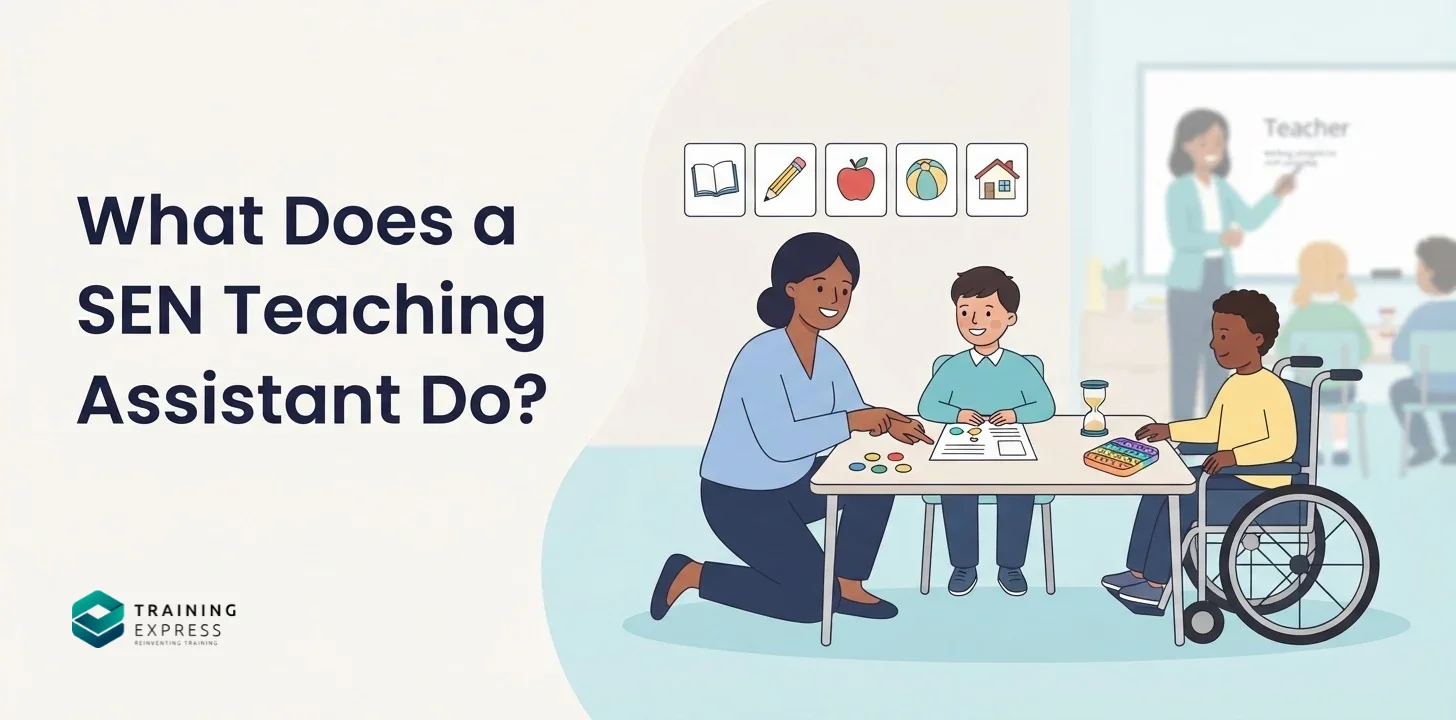

A SEN teaching assistant supports pupils with special educational needs and disabilities (SEND) so they can learn, take part and feel safe at school. They work under the direction of the class teacher and the special educational needs co-ordinator (SENCO), often one-to-one or with small groups.
This guide sets out a typical SEN teaching assistant job description: the duties, a typical day, the skills schools look for and a sample you can adapt. In England, 1,858,327 pupils had special educational needs (SEN) in 2025/26, according to the Department for Education (DfE).
Table of Contents
What is a SEN teaching assistant?
A SEN teaching assistant (TA) is a member of school support staff who helps pupils with SEND get the most out of their lessons and school day. You might see the role advertised as SEND TA, special needs teaching assistant, learning support assistant (LSA) or 1:1 TA.
SEN TAs work in mainstream primary and secondary schools, special schools, colleges and additionally resourced provisions (ARPs). An ARP is a specialist unit inside a mainstream school for pupils with a particular type of need.
SEN teaching assistant vs teaching assistant vs LSA
Schools use these titles differently, but this table shows the usual differences.
| Role | Main focus | Who they support | Typical tasks |
|---|---|---|---|
| Teaching assistant | Supporting the whole class | Any pupil the teacher directs | Group work, resources, reading, classroom routines |
| SEN teaching assistant | Supporting pupils with SEND | Pupils on SEN support or with an EHC plan | Adapting tasks, interventions, personal care, behaviour support |
| Learning support assistant | Often individual or small-group support | Varies by school | Can be the same as a TA or SEN TA |
An education, health and care (EHC) plan is a legal document from the local council. It sets out the support a child or young person with more complex needs must get.
SEN teaching assistant duties and responsibilities
A SEN teaching assistant’s main duties are supporting learning, communication, behaviour and wellbeing, personal care, recording progress and safeguarding. The mix depends on the pupils you support and the school’s plans for them.

Supporting learning
You’ll work with pupils one-to-one or in small groups, both in class and outside it. That might mean breaking a task into smaller steps, reading instructions aloud, pre-teaching key words before a lesson or running a reading or maths intervention that the teacher or SENCO has set up.
Supporting communication and interaction
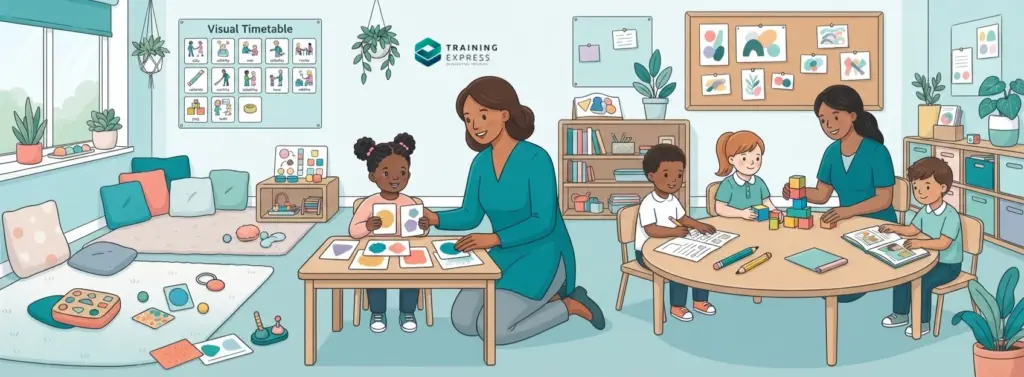
You might use a visual timetable, picture cards, signing such as Makaton, or PECS (Picture Exchange Communication System), if the school uses them. You’ll also give pupils time to process what’s been said before expecting an answer.
Supporting behaviour, emotions and wellbeing
Behaviour is often a form of communication. You’ll follow each pupil’s support plan, notice early signs of stress and help them calm down, perhaps with a quiet space or a movement break. Any physical intervention should only be used by trained staff, in line with school policy and DfE guidance.
Personal care and physical support
Some SEN TAs help with toileting, eating, dressing, moving around or using equipment, and some help with medicines or health procedures. DfE’s guidance on supporting pupils with medical conditions says staff should have suitable training before they take this on, and should follow the pupil’s individual healthcare plan and the school’s policy. Personal care should always protect the pupil’s dignity and privacy.
Recording and reporting progress
You’ll keep short notes on what a pupil managed and what helped. Teachers and the SENCO use them to plan next steps and in SEN support and EHC plan reviews.
Working with teachers, the SENCO, therapists and parents
You’ll get direction from the class teacher, follow advice from the SENCO and specialists such as speech and language therapists, and sometimes pass on day-to-day updates to parents, as the school allows.
Safeguarding
Safeguarding means protecting children from harm. Keeping children safe in education (KCSIE) 2026 is the statutory safeguarding guidance for schools in England. It says schools should make sure all staff read Part one of the guidance, including staff who don’t work directly with children. If you’re worried about a child, you report it straight away to the designated safeguarding lead (DSL), the person in charge of safeguarding in school.

What a SEN teaching assistant does not do
A SEN teaching assistant doesn’t take overall responsibility for a pupil’s progress. The SEND Code of Practice says teachers are responsible and accountable for the progress and development of the pupils in their class, including where pupils get support from TAs (paragraph 6.36).
SEN TAs also don’t diagnose conditions or decide whether a child gets an EHC plan. Health professionals make diagnoses, and the local council decides on EHC plans. You can read more about how that works in our guide to the special educational needs code of practice.
A typical day as a SEN teaching assistant
This is a typical example from a primary school 1:1 role. Every school and pupil is different.
| Time | What you might do |
|---|---|
| Before school | Check the plan with the teacher, set out visual timetables and resources, greet your pupil at the gate and help them settle |
| Morning lessons | Support in phonics and maths, break tasks into steps, run a short reading intervention |
| Break and lunch | Help with eating or personal care, support play and friendships, offer a calm space if the playground gets too busy |
| Afternoon | Support in topic lessons, use a movement break, help the pupil pack up and get ready for home time |
| After school | Write notes, share a quick update with the teacher, and sometimes attend training or a review meeting |
How the role changes by setting
The core job is the same everywhere, but the setting changes your day.
| Setting | What the role usually looks like |
|---|---|
| Mainstream class support | Supporting several pupils with SEND during normal lessons, plus some group interventions |
| 1:1 support | Working with one pupil for much of the day, often a pupil with an EHC plan, following their plan closely |
| ARP or SEN unit | Small classes of pupils with a similar type of need, with more specialist approaches and some time in mainstream lessons |
| Special school | Small classes with high staff ratios, more personal care and medical support, and a curriculum adapted to pupils' needs |
Skills and qualities of a good SEN teaching assistant
The best SEN TAs are patient, calm and good at noticing small changes in a child. Schools most often ask for:
- Patience: progress can be small and slow.
- Calm under pressure: you stay steady when a pupil is distressed.
- Communication: you adjust how you speak for each pupil and keep adults informed.
- Empathy: you see the day from the pupil’s point of view.
- Observation: you spot what happens before a pupil becomes upset.
- Teamwork: you follow the teacher’s lead and share what you notice.
- Flexibility: plans change quickly.
- Good English and maths: for supporting reading and number work.
- Confidentiality: you keep information about pupils and families private.
What schools list as essential vs desirable
School person specifications vary, but most adverts ask for something like this.
| Area | Usually essential | Often desirable |
|---|---|---|
| Qualifications | Good English and maths, often GCSE grade 4 (C) or equivalent | A teaching assistant qualification at Level 2 or 3 |
| Experience | Working with children, paid or voluntary | Supporting pupils with autism, ADHD or speech, language and communication needs (SLCN) |
| Knowledge | Basic understanding of safeguarding | Knowledge of the SEND Code of Practice and the 4 areas of need |
| Training | Willing to train | First aid, Makaton, behaviour support training |
If you’re new to SEND, our SEN teaching assistant course covers SEN support, high-quality teaching and the 4 broad areas of need, so you can go into applications knowing the basics.
Sample SEN teaching assistant job description
Here’s a general sample SEN teaching assistant job description. Adapt the details to fit the school and role.
Job title: SEN Teaching Assistant
Reports to: Class teacher and SENCO
Job purpose: To support pupils with special educational needs and disabilities to access learning, take part in school life and make progress towards their targets, working under the direction of the class teacher and SENCO.
Main duties:
- Support individual pupils and small groups with learning activities planned by the teacher.
- Adapt tasks and resources to meet pupils’ needs, as directed by the teacher or SENCO.
- Deliver planned interventions and record pupils’ responses.
- Follow pupils’ SEN support plans, EHC plans, behaviour plans and healthcare plans.
- Support pupils’ communication using agreed approaches, such as visual supports or signing.
- Support pupils’ emotional wellbeing and behaviour using agreed strategies.
- Provide personal care and physical support with dignity, after suitable training.
- Keep accurate records and contribute to review meetings.
- Work with teachers, the SENCO, other professionals and parents as agreed.
- Follow the school’s safeguarding, health and safety, and confidentiality policies, and report any concerns to the DSL.
Person specification:
| Criteria | Essential | Desirable |
|---|---|---|
| Qualifications | GCSE grade 4 (C) or equivalent in English and maths | Level 2 or 3 qualification in supporting teaching and learning |
| Experience | Experience of working with children or young people | Experience of supporting pupils with SEND |
| Knowledge | Understanding of safeguarding | Knowledge of the SEND Code of Practice |
| Skills | Clear communication, patience, teamwork | Makaton, first aid or behaviour support training |
| Other | Enhanced DBS check with children's barred list check | Willingness to support personal care |
Hours, pay and working pattern
Most SEN TA jobs are term time only, and many are part time. The National Careers Service gives typical hours of 24 to 40 a week in term time and a salary range of £19,000 to £27,000. Your actual pay depends on your hours. Our SEN teaching assistant salary guide explains the 2026/27 pay rates.
How to become a SEN teaching assistant
You don’t need a specific qualification to become a SEN TA. Most schools look for good English and maths, some experience with children and an enhanced DBS check. Our step-by-step guide on how to become a SEN teaching assistant covers the routes in, and when you get an interview, you can practise with these SEN teaching assistant interview questions.
Frequently Asked Questions (FAQs)
What is the role of a SEN teaching assistant?
A SEN teaching assistant helps pupils with special educational needs and disabilities learn and take part in school life. They support pupils one-to-one or in small groups, adapt tasks, help with communication and behaviour, give personal care where needed and record progress, under the direction of the class teacher and SENCO.
What is the difference between a TA and a SEN TA?
A general teaching assistant supports the whole class wherever the teacher needs them. A SEN teaching assistant focuses on pupils with SEND, often following their support plans or EHC plans closely. In practice, many TAs do both, and job titles vary between schools, so read the job description rather than relying on the title.
Do SEN teaching assistants do personal care?
Many do. Personal care can include help with toileting, eating and dressing, and some roles include supporting medical needs. Schools should train staff before they take on these tasks and follow each pupil’s care or healthcare plan. Good personal care always protects the pupil’s dignity and privacy. Check the job description so you know what the role involves.
What is a 1:1 SEN teaching assistant?
A 1:1 SEN teaching assistant works mainly with one pupil, often a pupil with an EHC plan. They help that pupil access lessons, manage their day and build independence. A good 1:1 TA doesn’t do the work for the pupil, and steps back where they can so the pupil learns to manage alone.
Is being a SEN teaching assistant hard?
It can be demanding, both physically and emotionally, with distressed pupils, personal care and plans that change quickly. The small wins, such as a pupil reading a sentence alone or joining a game, make it worthwhile for many. Good training, a supportive team and clear plans make the job much easier.
What makes a good SEN teaching assistant?
A good SEN teaching assistant is patient, calm and observant. They build a trusting relationship with the pupil, follow the teacher’s plan and notice what helps. They also know when to step back so the pupil can do things alone. Knowing the basics of SEND and safeguarding helps from day one.
Related Blogs