Food Hygiene
 Health & Safety
 Safeguarding
 First Aid
 Business Skills
 Personal Development



Infection prevention is part of everyday healthcare, whether someone works on a busy hospital ward or supports residents in a care home. Even routine tasks, such as cleaning equipment or assisting patients, require appropriate precautions. CSTF Infection Prevention and Control provides a common training framework to help healthcare staff recognise infection risks and work safely.
The Core Skills Training Framework (CSTF) sets out standard learning outcomes for important healthcare training subjects in the UK. Its infection prevention and control component covers essential precautions, transmission risks and staff responsibilities. Training is organised into Level 1 and Level 2, reflecting different workplace roles.
For NHS employees, healthcare assistants and support workers, choosing suitable infection control training can sometimes be confusing. Requirements depend on job responsibilities, workplace policies and the relevant training framework. This guide explains the CSTF levels, key learning topics, refresher expectations and what to consider before choosing a course.
Table of Contents
What Is CSTF Infection Prevention and Control?
CSTF Infection Prevention and Control is a healthcare training subject that establishes common learning outcomes for preventing and controlling infections. It helps staff recognise infection risks, understand their responsibilities and apply appropriate precautions in their workplace.
What Does CSTF Stand For?
CSTF stands for Core Skills Training Framework. Published by Skills for Health, the Core Skills Training Framework supports consistent statutory and mandatory healthcare training across organisations.
It identifies learning outcomes and refresher expectations for important healthcare subjects, including infection prevention and control.
However, CSTF is a training framework, not a regulated qualification or professional licence. Employers use it to help identify appropriate training and assess whether learning meets organisational requirements.
Why Infection Prevention and Control Matters
Healthcare-associated infections (HCAIs) can affect patients receiving treatment or care. Staff therefore need suitable knowledge to reduce transmission risks and maintain safe environments.
Effective infection prevention protects patients, supports staff safety and contributes to consistent care standards.
CSTF Infection Prevention and Control Level 1 vs Level 2
CSTF infection prevention training has two levels, each addressing different learning needs. The appropriate level depends on the employee’s responsibilities, patient contact and workplace risk assessment.
Level 1: Foundation Training
CSTF Infection Prevention and Control Level 1 focuses on essential infection prevention knowledge relevant to healthcare workers, including non-clinical employees.
It covers infection risks, personal responsibilities and basic precautions that help prevent transmission.
Receptionists, administrative workers, housekeeping employees and other healthcare staff may require Level 1 training, depending on their roles.
Level 2: Training for Direct Patient Care
CSTF Infection Prevention and Control Level 2 covers additional infection prevention knowledge relevant to staff providing direct patient care.
It builds on foundation knowledge, addressing infection transmission, healthcare-associated infections and precautions used during care activities.
Healthcare assistants, nurses and other patient-facing professionals may require Level 2 outcomes, subject to their responsibilities and employer requirements.
Key Differences Between Level 1 and Level 2
The CSTF subject guide sets out learning outcomes and refresher expectations for both levels.
Swipe left to see the full table →
| Comparison | Level 1 | Level 2 |
|---|---|---|
| Typical audience | Relevant clinical and non-clinical staff | Staff providing direct patient care |
| Main focus | Foundation infection prevention principles | Additional patient-care infection precautions |
| Learning outcomes | Personal responsibilities and standard precautions | Infection risks, transmission and patient-care responsibilities |
| Refresher guidance | Every 3 years | Every year |
| Training selection | Based on employer assessment | Based on employer assessment |
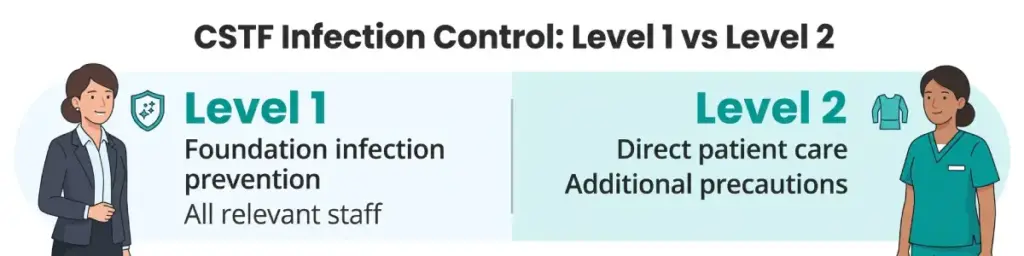
These refresher frequencies reflect CSTF guidance rather than universal legal certificate expiry periods. Employers may require additional training following changes in risks, responsibilities or guidance.
What Does CSTF Infection Prevention and Control Training Cover?
CSTF infection control training addresses the knowledge and precautions needed to reduce infection transmission in healthcare settings.
The precise content depends on the training level and employee responsibilities. However, several important learning areas support safer daily practice.
Understanding Infection Risks and Transmission
Infections can spread through direct contact, contaminated equipment, droplets and other transmission routes.
Healthcare workers should recognise how microorganisms spread and what measures interrupt transmission.
This includes understanding the chain of infection, identifying possible exposure risks and following precautions appropriate to the situation.
For example, shared equipment can become a source of transmission if it is not appropriately cleaned between patients.
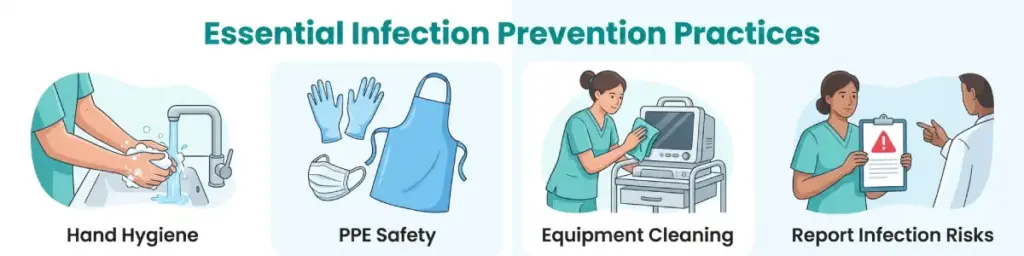
Hand Hygiene and Personal Protective Equipment
Hand hygiene is an essential part of preventing infection transmission.
Staff should clean their hands at appropriate times, including before and after relevant patient contact, after exposure risks and after removing gloves.
Personal protective equipment (PPE) may include gloves, aprons, masks and eye protection. Selection should reflect the task and assessed infection risk.
The NHS guidance on standard infection control precautions explains precautions that help reduce infection transmission across healthcare settings.
Importantly, gloves do not replace proper hand hygiene.
Cleaning, Waste Disposal and Equipment Safety
Maintaining clean healthcare environments helps reduce infection risks.
Depending on their responsibilities, staff may need to:
- Clean frequently touched surfaces according to workplace procedures.
- Decontaminate reusable care equipment appropriately.
- Handle contaminated linen and waste safely.
- Follow procedures for blood and body-fluid spillages.
- Use and dispose of sharps safely.
These activities should follow approved workplace procedures and relevant infection prevention guidance.
Reporting Infection Risks and Preventing Exposure
Recognising infection risks is only one part of prevention. Staff must also know how to respond appropriately.
Concerns may involve contaminated equipment, suspected infection, unsafe practices or accidental exposure to blood and body fluids.
Employees should report incidents promptly, follow local procedures and seek appropriate support. Professionals with wider responsibilities can develop their knowledge of risk assessment and outbreak management through infection prevention training.
Training Express includes this subject within Module 15, CSTF Infection Prevention and Control, of its wider health and social care course.
Applying Infection Prevention and Control in Healthcare Settings
Infection prevention responsibilities vary between healthcare settings. A hospital ward, residential care home and community healthcare service may involve different tasks and risks.
Infection Control in Hospitals and Care Homes
Healthcare staff must adapt precautions to their working environment while following applicable guidance. Further infection control training can help healthcare workers develop their understanding of hygiene, infection prevention and safe patient-care practices.
The NHS England National Infection Prevention and Control Manual provides guidance on infection prevention practices in England.
Organisations must also consider local procedures, risk assessments and relevant requirements. Healthcare guidance and regulatory arrangements can differ across the UK’s four nations.
Everyday Infection Prevention Responsibilities
The following examples show how responsibilities vary:
- Healthcare assistant: Performs hand hygiene before and after relevant patient contact and selects PPE according to risk.
- Care-home support worker: Follows appropriate cleaning, equipment-handling and infection reporting procedures.
- Hospital receptionist: Maintains personal hygiene, follows respiratory hygiene precautions and reports relevant concerns.

These examples demonstrate that infection prevention is not limited to clinical staff.
Everyone working in healthcare has responsibilities appropriate to their duties.
Is CSTF Infection Prevention and Control Training Mandatory?
Healthcare staff need appropriate infection prevention knowledge to perform their responsibilities safely. However, legal duties, CSTF learning outcomes and employer-specific training requirements are not identical.
NHS and Healthcare Employer Requirements
Employers are responsible for identifying suitable training according to staff duties and workplace risks.
In England, CQC Regulation 12 requires regulated providers to assess health and safety risks and prevent and control infection transmission.
This does not mean every healthcare worker must purchase a particular commercial CSTF course.
NHS organisations and other healthcare employers determine which training outcomes apply and what evidence employees must provide.
How Often Should CSTF Infection Control Training Be Refreshed?
The CSTF identifies different refresher expectations for infection prevention training:
- Level 1: Every three years.
- Level 2: Every year.
The Skills for Health FAQs explain how refresher requirements relate to CSTF alignment.
Employers may arrange earlier updates following infection incidents, changes in working practices or revised guidance.
Refresher training helps staff maintain current knowledge, but workplace competence also depends on applying appropriate precautions consistently.
How to Choose a CSTF Infection Prevention and Control Course
Choosing suitable training involves more than selecting a course that provides a certificate.
A CSTF Infection Prevention and Control Course should address learning outcomes relevant to your role and meet your employer’s requirements.
What to Check Before Enrolling
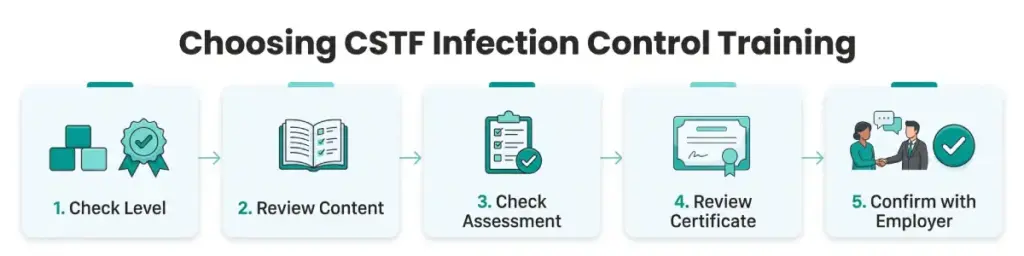
Before choosing training, consider these five questions:
- Which level applies? Confirm whether your role requires Level 1, Level 2 or particular learning outcomes.
- Does the content match CSTF? Check whether the provider clearly describes the relevant outcomes.
- How is training assessed? Establish whether online assessment is sufficient or workplace competence must also be demonstrated.
- What does the certificate show? Review the training level, completion details and evidence provided.
- Will your employer accept it? Confirm recognition before enrolling, particularly if training is needed for employment or workplace compliance.
Online CSTF infection control training can support theoretical knowledge. However, some responsibilities may also require supervised practice or workplace assessment.
A course claiming CSTF alignment should not automatically be regarded as officially NHS-approved.
Develop Your Infection Prevention Knowledge with Training Express
Level 3 Diploma in Health and Social Care
Infection prevention knowledge is important for professionals supporting people in healthcare and social care environments.
Training Express offers a Level 3 Diploma in Health and Social Care that includes Module 15, CSTF Infection Prevention and Control.
The broader online course also covers health and safety responsibilities, risk management, safeguarding, communication and person-centred care.
It provides an opportunity to develop wider health and social care knowledge alongside infection prevention principles. Learners should check separately whether their training meets their employer’s specific CSTF requirements.
Conclusion
CSTF Infection Prevention and Control supports consistent infection prevention knowledge across UK healthcare settings. It helps staff recognise risks, follow appropriate precautions and contribute to safer patient care. These principles apply to everyday responsibilities in hospitals, care homes and community services.
Level 1 and Level 2 address different learning needs, with refresher expectations reflecting their respective outcomes. Healthcare workers should confirm which training applies to their duties and employer requirements. Appropriate training must also be supported by practical competence and current workplace procedures.
Maintaining infection prevention knowledge is an ongoing professional responsibility. Staff benefit from relevant training, timely updates and clear organisational guidance. Applying these principles consistently helps protect patients, colleagues and everyone who relies on safe healthcare services.
CSTF Infection Prevention and Control FAQs
Is CSTF Infection Prevention and Control Training Mandatory in the UK?
Employers must ensure healthcare staff receive appropriate training. However, individual requirements depend on responsibilities and applicable regulations. A particular commercial CSTF certificate is not universally required by law.
What Is the Difference Between CSTF Infection Control Level 1 and Level 2?
Level 1 covers foundation infection prevention knowledge for relevant healthcare staff. Level 2 adds learning outcomes associated with direct patient care and additional infection prevention responsibilities.
Can You Complete CSTF Infection Prevention and Control Training Online?
Yes. Online courses can deliver knowledge-based training. However, employers may require practical demonstrations or workplace assessments to confirm that staff can apply relevant infection prevention precautions.
How Long Does CSTF Infection Control Training Last?
Course duration varies by provider, level and assessment format. CSTF refresher guidance generally specifies three years for Level 1 and one year for Level 2.
Is a CSTF Infection Prevention and Control Certificate Accepted by the NHS?
Acceptance depends on the employer and whether the training meets relevant learning outcomes. Learners should confirm recognition with their NHS organisation rather than assuming that any certificate will be accepted.

Adam Smith
Author | Specialises in Health and Social Care.
Adam is an author at Training Express, with over 3 years of experience creating practical resources and strategies to support learners and enhance their professional & personal development.